Workato is what a company buys when integration stops being a task and becomes somebody's job. That is a real threshold, and the platforms that serve it are genuinely good at things the cheap tools do not attempt: environments, governance, error handling that a person is accountable for, and an administrative layer that survives the departure of whoever built the first twenty automations.
It is also a category with an unusual property, and you notice it about four minutes into shopping. Nobody publishes a price.
Not Workato, whose pricing page carries no plan names, no figures, and no billing unit. Not MuleSoft, where every edition in every currency reads contact for pricing. Not Tray, not Jitterbit, not Celigo, not Prismatic. The one exception in this entire guide is a single Boomi plan at $99 per month plus usage, and Boomi hides the rest of its catalog behind sales like everyone else.
That changes what a comparison can even be. You cannot line these up on price, because there are no prices. What you can line up is how much you have to commit before you are allowed to find out, and that turns out to be the more useful question anyway, because it is the one that predicts which of these purchases people regret.
In this article
1.
2.
3.
4.
5.
6.
7.
8.
9.
10.
11.
12.
13.
14.
The Workato Alternatives at a Glance
Read the second column before the fourth. The unit a contract is sized on is what decides whether your bill tracks something you can predict, and it almost never gets compared.
| Alternative | Sized on | What you commit before you see a number | Best for |
|---|---|---|---|
| Boomi | Connections, plus separate plan families | Nothing, if you take the pay as you go door | Teams who want to prove the thing works before procurement gets involved |
| Celigo | Endpoints and flows, flat rate, no overage | A demo, but the unit is countable in advance | Teams whose integration count is stable and whose volume is not |
| Tray.ai | Tasks, usage based | A full sales process | Teams building custom workflows where flexibility beats speed |
| MuleSoft | Not published, sold as Anypoint Platform | A full sales process, and usually an engineering owner | Organizations buying API governance and reuse, not automations |
| Jitterbit | Connections, tiered 2 to 3, 5, then 8 plus | A full sales process, and an annual contract on every product | Teams who can count their systems and want the unit to match |
| Prismatic | Volume per instance, never per execution | A full sales process | B2B software companies shipping integrations inside their own product |
| Zapier, Make, n8n | Steps, operations, or workflow runs | Nothing, all published | Teams for whom integration is a task rather than a job |
| A purpose built connector | One integration, flat monthly | Nothing | One pair of systems that has to stay in step forever |
Why Teams Look for a Workato Alternative
These are five different problems and only two of them are solved by a different platform. Being precise here saves a migration.
The renewal arrived and the number moved
This is the most common trigger by a distance. Usage grew, the task pool was resized, and the quote came back materially higher than the year before. Vendr's spread from $20,000 to $183,999 is not describing different products, it is describing the same product sized against different forecasts, and a forecast that was wrong in year one compounds at renewal.You are paying platform rates for a handful of recipes
A team buys the platform for a big migration, ships it, and then the standing workload settles into six or eight small always on syncs. The contract was sized for the migration. The renewal is for the syncs. This is the single clearest signal that the answer is not another platform.Nobody can safely edit what was built
Low code is a real advantage right up until the person who built the recipes leaves. What survives them is a set of automations nobody wants to touch, running in production, renewing annually. Moving platforms does not fix this, it repeats it somewhere cheaper.Procurement cannot get a comparable quote
Buying committees are built to compare like for like, and this category makes that structurally impossible. Three vendors, three units, three custom numbers, and no published list to anchor against. Teams frequently start shopping simply because they cannot defend the renewal internally.The integration that matters keeps going quiet
Not a pricing problem at all, and the one this guide spends the most time on. A recipe stops firing, nothing alerts, and the first person to notice is a customer. If this is your reason, read the section on the criterion nobody's shortlist uses, because it does not appear on any vendor's page including Workato's.
If your reason is the first or second, the sections on Boomi and Celigo are the honest answer. If it is the third, the question is ownership rather than vendor. If it is the fourth, Jitterbit and Celigo at least count something you can enumerate. If it is the last one, the tool matters less than what you connect it to.
The Commitment Ladder
Since none of these vendors will give you a number without a conversation, rank them by how much certainty they demand from you before that conversation can happen. This is the frame worth carrying into every call.
- 1
Nothing at all
Boomi's pay as you go plan at $99 per month plus usage, no contract, credit card signup. You can build the thing, watch it run for a month, and decide with evidence. Nothing else in this category offers that. - 2
A trial, but not a price
MuleSoft advertises 30 days free with no credit card and no installation. Celigo offers 30 days of unlimited platform access. Boomi's trial is $0 for 30 days. You learn whether it works. You still do not learn what it costs. - 3
A countable unit
Jitterbit tiers its iPaaS on connections, 2 to 3 at Standard, 5 at Professional, 8 or more at Enterprise. Celigo prices on endpoints and flows. You can count both today, so you can at least sanity check the quote you are given. - 4
A forecast of your own future
Workato on recipes, connectors, and task volume. Tray on tasks. This is the top of the ladder, and it asks you to predict a year of consumption in a unit you have never measured, then holds you to it.
Nothing on this ladder is wrong. A forecast based contract is exactly right for an organization that runs a large integration portfolio and knows its shape. It is exactly wrong for a team that has three connections and a hypothesis.
Boomi
Boomi is the closest thing this category has to a public door. Alongside the usual sales gated editions it publishes a pay as you go plan at $99 per month plus usage with no contract and credit card signup, and a free trial at $0 for 30 days. For a team that needs to demonstrate value before procurement will engage, that combination is worth more than a feature it might never use.
The structure to understand before you commit is that Boomi's catalog is split into separate plan families. Integration runs Standard, Professional, Professional Plus, Enterprise, and Enterprise Plus. API Management runs its own equivalent ladder. Data Hub and Data Integration are further families again. A deployment that touches integration, APIs, and master data is not one line item, it is three, and the tiers do not move together.
Where Boomi wins
- The only published, self serve entry point in the category
- Connection based sizing you can enumerate before you buy
- A genuine 30 day trial at no cost
- Mature, with a very wide connector library
The tradeoff
- Every serious edition is still contact sales
- The split catalog means a full deployment is several contracts
- It configures like enterprise software, because it is
- Pay as you go usage costs are the part you still cannot forecast
The honest read on Boomi is that it does not solve the transparency problem, it just gives you a way in that does not start with a meeting. That is a smaller thing than it sounds and a bigger thing than every competitor offers.
Celigo
Celigo is the option to look at hardest if your complaint is that the bill moves for reasons you did not cause. It prices on endpoints and flows rather than per task or transaction, publishes that as flat rate with no overage fees, and offers 30 days of unlimited access to evaluate. Three editions, Standard, Professional, and Enterprise, none with a published figure.
The reason the unit matters more than the rate here is that endpoints and flows are architectural. They change when you connect a new system or build a new process, both of which are decisions you make deliberately. Tasks and transactions are behavioral, and they change when your business has a good quarter. If your volume is spiky and your architecture is stable, that difference is the whole comparison.
Tray.ai
Tray sells Pro, Team, and Enterprise, aimed respectively at a specific use case, a department, and multiple departments with partner integrations. Pricing is usage based on tasks, described as scaling on demand across integration, automation, MCP, and agents. A trial exists. No figures are published at any tier.
Tray's reputation is for flexibility, and that is accurate in both directions. It is the platform people reach for when the workflow has awkward logic that the more opinionated tools fight, and it is also the platform where that flexibility turns into something only its author understands. Task based pricing on top of that means your bill tracks how much work the awkward logic does, which is the least predictable combination in this guide.
MuleSoft
MuleSoft belongs on the list but frequently does not belong on the shortlist, and mixing it in is how evaluations lose a month. Sold by Salesforce as Anypoint Platform and MuleSoft Automation, it is contact for pricing across every edition and every currency, with a 30 day trial that needs no credit card and no installation.
The distinction that matters is that MuleSoft is an API platform and Workato is a workflow automation platform. MuleSoft is bought when an organization needs API design, governance, and reuse across many systems, and the people who operate it are engineers. Workato is bought when business teams need to automate processes and operate them without filing a ticket. Choosing the wrong one is costly in both directions, and the symptom is the same either way: an expensive platform that one small group can use and nobody else can.
If you are looking at MuleSoft because Workato felt too shallow for your governance requirements, that is a sound reason. If you are looking at it because it appeared next to Workato on a comparison grid, it probably is not.
Jitterbit
Jitterbit tiers its iPaaS on connections, Standard at 2 to 3, Professional at 5, and Enterprise at 8 or more, and runs a parallel App Builder ladder priced on app count, Standard at 4, Professional at 10, Enterprise at 20, and Enterprise Plus for custom. No dollar figures are published, enterprise license agreements are available for organization wide deployment, and the site states plainly that all products require an annual contract.
The connection count is the attraction. It is the one unit in this guide that maps directly onto something you can write down today without instrumenting anything, which makes the quote you receive checkable. The annual contract requirement on every product is the cost of that clarity, and it means Jitterbit sits lower on the commitment ladder for predictability and higher for reversibility.
Prismatic and the Embedded Case
Prismatic is in a different business from everything above it, and teams sometimes arrive at it by accident and find it is what they actually needed. It is built for B2B software companies that ship integrations inside their own product for their customers to use, priced per deployed instance across Scale, Enterprise, and Custom tiers, and it makes a point of never billing on API calls or executions.
The distinction is who runs the integration. Every other platform here assumes your team operates integrations for your own company. Prismatic assumes your customers each get their own configured instance of an integration you built and shipped. If you have been trying to make an internal iPaaS serve customer facing integrations, the friction you have been feeling is structural rather than something you configured wrong.
Zapier, Make, and n8n: Down Market Rather Than Sideways
If the reason you are shopping is cost, the useful move is almost always down rather than across. Every platform above is sold on an annual contract through a sales process, so trading one for another swaps the logo and keeps the shape.
Zapier publishes its prices and bills per action step. Make bills per module call. n8n bills per workflow run and can be self hosted for no license fee, though its Sustainable Use License is fair code rather than open source, which is a real distinction if your procurement team reads licenses. All three are running the same afternoon you sign up.
What you give up is genuine: environments, governance, administrative controls, formal support, and error handling that somebody is accountable for. That list is exactly what the enterprise platforms sell, and if you need it, you need it. The mistake is assuming you need it because you are an enterprise, when the actual test is whether integrations are a job or a task.
The Zapier versus Workato question specifically comes up on most of these evaluations, and it is covered properly in our Zapier alternatives guide, which organizes that end of the market by billing unit. The ownership question, meaning who operates the thing and who is on the hook when it stops, is covered in the n8n alternatives guide. If what you are actually trying to do is keep two specific tools in sync rather than automate broadly, the Unito alternatives guide is the closer match.
Workato Pricing, and Why It Is Not Published
Worth stating plainly, because it is the thing most guides talk around. Workato's pricing page has no plan names, no figures, and no stated billing unit. What is known publicly about the shape of a contract comes from buyers rather than the vendor: recipes, connectors, task volume, and add ons are the factors, annual commitment is the norm, and Vendr's procurement data across 341 purchases puts the median buyer at $64,544 per year with a range of $20,000 to $183,999 and an average negotiated saving of 19 percent.
That last figure is the actionable one. A published average discount of 19 percent means the first number is an opening position, and teams who treat it as a list price pay the difference. Everything else about the range should be read as a caution rather than a forecast, because a spread of nearly 10x on the same product means the number is a function of how the deal was scoped, not of what the software is.
The Criterion Nobody's Shortlist Uses
Every quote in this category is sized on a number you are asked to predict. Recipes, tasks, connections, endpoints, instances. The evaluation process is built around estimating that number well, the negotiation is about what happens when you estimate it badly, and the renewal is where being wrong gets priced in.
Which means the integrations that get the most attention in an iPaaS evaluation are the loud ones. High volume, easy to count, obviously expensive. And the integrations that get the least attention are the ones that barely register on any meter and cannot ever be allowed to fail.
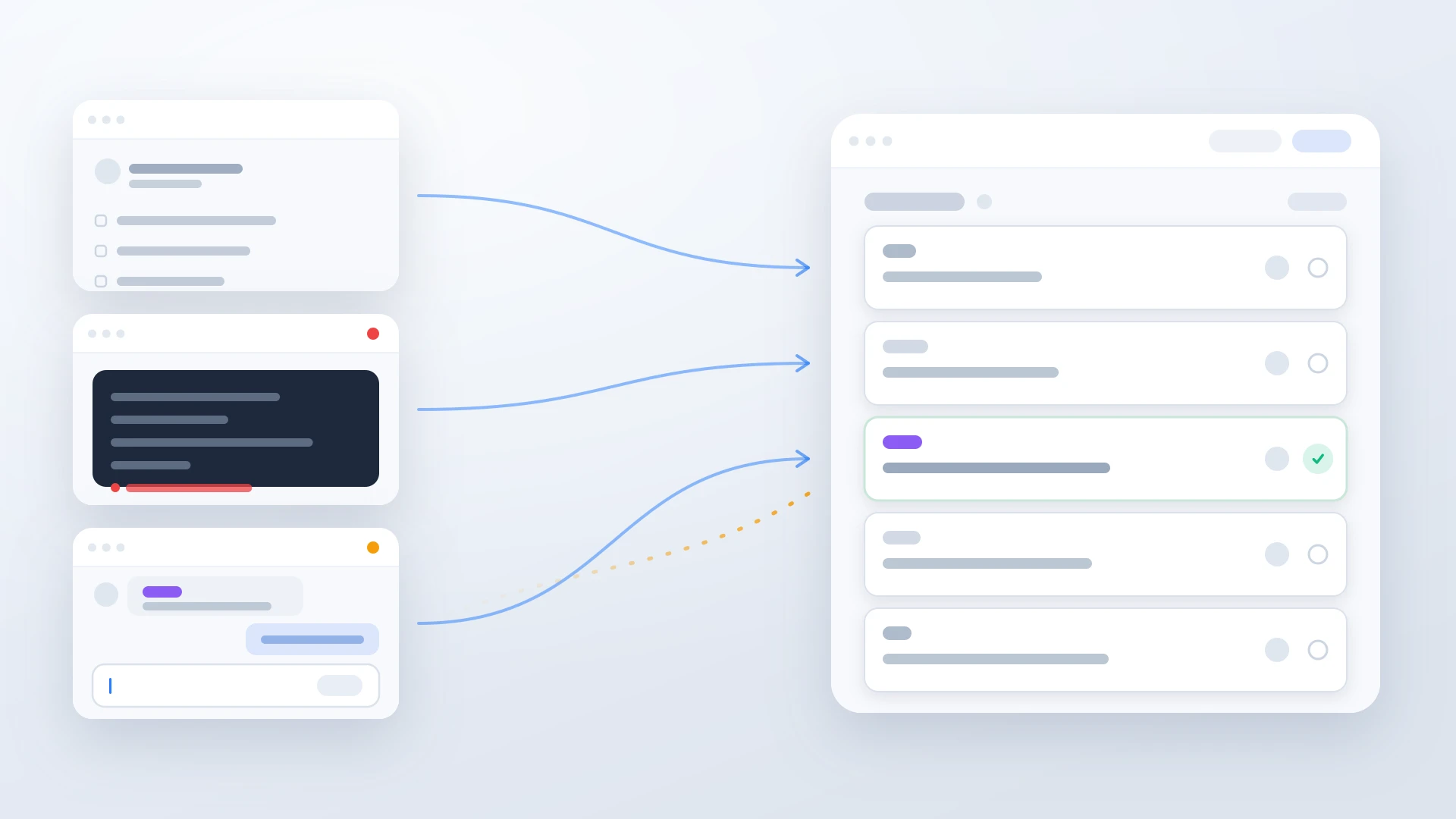
The clearest example is the one sitting in most support organizations right now. A customer reports a bug. Support needs it to reach engineering, and needs to know when it is fixed, and needs the customer to find out. That path might carry thirty items a month, which rounds to nothing in a task pool sized for a data migration. It also cannot be allowed to break, because when it breaks nothing errors. The recipe simply stops firing, the ticket sits in a state nobody reports on, the fix ships, the issue closes, and the customer who reported it is never told.
This is the failure mode that survives every platform migration in this guide, because it is not a platform problem. It is what happens when a connection that carries obligations is built out of the same materials as a connection that carries data. A nightly sync that misses a run catches up tomorrow. A ticket that loses its link to an issue does not catch up at all, and nobody finds out until a customer asks a second time.
Four things worth checking against whatever you shortlist, and against what you have today:
- When something stops firing, does anyone find out from the tool, or from a customer asking why they never heard back?
- Can you list, right now, every support ticket waiting on an engineering fix and how long each has been waiting?
- When a fix ships, does the person who reported it get told, or does that depend on somebody remembering?
- Do comments travel both ways, or does the engineering context stay in the tracker where support cannot see it?
If the answers are no, no, no, and no, that is the normal state of things and it is not fixed by the tier above the one you are on. Our explainer on bidirectional sync covers why the comment half is the part homemade versions get wrong, and managing feature requests from support to engineering covers the same boundary for requests rather than defects.
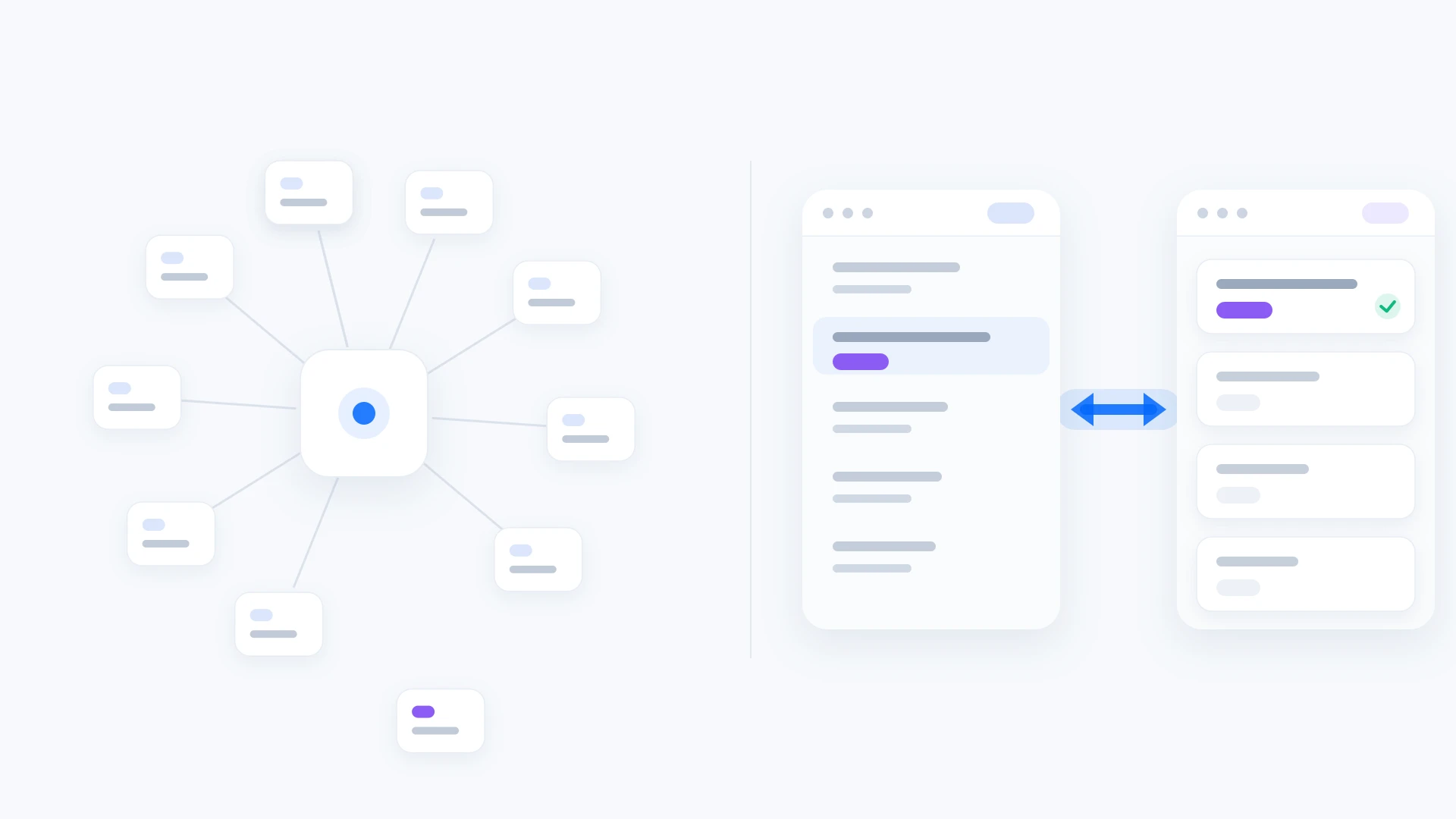
For teams running HubSpot, this specific connection is the job IssueLinker was built for, and it is deliberately not a platform. A HubSpot ticket becomes a Linear, Jira, or GitHub issue in one click, status and comments stay in sync in both directions with loop prevention built in, and it works without HubSpot Pro workflows, which is the requirement that quietly disqualifies most of the alternatives above for Starter and Service Hub teams. The honest boundary is scope: it will not sync Salesforce to NetSuite and it is not trying to. If you have a portfolio, buy a platform. If you have this one pair, a platform is the expensive way to get it. The HubSpot to Linear integration guide walks through the four ways teams usually try to build this themselves, including with Workato style platforms.
A platform contract is the expensive way to connect two tools
If the integration you actually care about is support to engineering, you do not need an annual commitment sized on a forecast. IssueLinker turns a HubSpot ticket into a Linear, Jira, or GitHub issue in one click, syncs status and comments both ways, and publishes its price.
How to Pick the Right Workato Alternative
Three questions settle this faster than any grid. How many integrations do you actually run? Can you count the unit you would be billed on? And is integration a job at your company or a task?
It is the only vendor here with a door you can walk through on a credit card. Build the real thing on pay as you go, run it for a month, and negotiate from data rather than from a forecast. Take the 30 day trial first.
Both price on units you can enumerate today, endpoints and flows for Celigo, connections for Jitterbit. If your bill keeps moving for reasons you did not decide, this is the change that fixes it.
MuleSoft if the requirement is API design and reuse across the organization with engineers owning it. Tray if the workflows have logic the opinionated tools fight. Both are top of the commitment ladder, so scope carefully.
If you are shipping connectors inside your own product, no internal iPaaS on this page is built for that, and forcing one is the most expensive wrong turn in the category.
Two or three connections do not need a contract sized on a forecast. A purpose built connector for the specific pair costs a rounding error against any quote here, needs no owner, and cannot be misconfigured, because there is nothing to configure.
If you are torn between finalists, do the exercise the sales process will not do for you. Write down every integration you run today, the unit each vendor would count it in, and what that count was twelve months ago. Then price all of them against next year's version of that number rather than this year's. The vendor whose unit grew slowest is usually the right answer, and it is frequently not the one that quoted lowest.
In a category where nobody publishes a price, the thing you are really negotiating is how wrong your forecast is allowed to be.
The test at the end is the one that sent you looking in the first place. Does work move between your systems without a person carrying it, and do you find out from the tool when it stops rather than from a customer? If yes, whatever you are paying is buying something real. If your integration portfolio is healthy and the one connection your customers can actually see is a recipe nobody has checked this quarter, the contract is not the problem, and a different contract will not be the answer. Our guide to the best HubSpot to Linear integration compares the purpose built end of that specific decision, and how support and engineering teams communicate covers what has to be true regardless of which tool you land on.