Freshdesk is what teams pick when the deciding factor is cost. That is not a criticism, it is the product's entire position: a conventional help desk with most of what the expensive platforms have, at a fraction of what they charge. For a lot of companies it does the job for years without anybody thinking about it.
Which is why almost nobody arrives at a Freshdesk alternatives search because the software failed. They arrive because they walked into a wall. A feature everyone assumed was included turned out to be two tiers up. A channel somebody added turned out to be a different product with its own price list. A free program the whole support operation was built inside quietly ran out. Or nothing broke at all, and the tool simply stopped matching the shape of the customers.
Those are four different problems with four different answers, and this is where most Freshdesk competitor roundups fall down. They rank ten help desks on a feature grid without ever asking which wall sent you looking. A tool that solves the tier problem beautifully can be completely wrong for the shape problem, and the cheapest option on the page is irrelevant if the thing you needed is a phone line.
So name the wall first. The shortlist usually collapses from ten names to two, and it takes about ten minutes.
In this article
1.
2.
3.
4.
5.
6.
7.
8.
9.
10.
11.
12.
The Freshdesk Alternatives at a Glance
Each tool below answers one wall well. None of them answers all four, and reading the list as a ranking is how teams end up migrating twice.
| Alternative | Wall it answers | Shape | Best for |
|---|---|---|---|
| Zoho Desk | The tier wall | Conventional help desk in a cheaper suite | Teams who want like for like with the feature included lower down |
| Hiver | The tier wall | Shared inbox that lives inside Gmail | Email-only support whose agents already work in Gmail |
| HappyFox | The tier wall | Per agent, or a flat plan with a ticket allowance | Teams whose agent count and ticket count move differently |
| Gorgias | The tier wall | Billed by ticket volume, never per agent | Ecommerce and Shopify merchants specifically |
| LiveAgent | The channel wall | Multichannel help desk including a call center | Teams who need voice or social without a second SKU |
| HubSpot Service Hub | The channel and shape walls | Help desk inside the CRM | B2B teams whose tickets are really account questions |
| Front | The shape wall | Collaborative inbox | Account-based support where several people share a mailbox |
| Help Scout | The shape wall | Shared inbox with a help desk on top | Small B2B teams who want support to read like email |
| Pylon or Plain | The shape wall | B2B and technical support platforms | Companies supporting customers in Slack, or supporting developers |
| Freshservice or Jira Service Management | The suite wall | IT service management | Internal requests that were never customer support |
| FreeScout or Chatwoot | The tier wall, all the way down | Self-hosted, no license fee | Teams with an infrastructure person who wants the job |
Why Teams Look for a Freshdesk Alternative
Be precise about which of these is yours, because three of the five are not fixed by moving to a different help desk at all.
The feature you need is two tiers up
Intelligent routing, multiple SLA policies, custom dashboards, and external collaborators all sit on Pro. Skill-based routing, a sandbox, and audit logs sit on Enterprise. Nothing about the tool broke, you just reached the part of the ladder where it stops being the cheap option.The free program ended
The old permanently free tier is gone, replaced by six months for up to two agents. Teams who built an entire support operation inside it spend the following month shopping under time pressure, which is the worst possible condition for this decision.You added a channel and changed products
Live chat, messaging, and social are Freshdesk Omni, not a switch inside Freshdesk. That reads as a surprise rather than an upgrade, because adding a widget does not feel like it should move you to a different product line.The AI line item does not behave like the others
Freddy AI Agent is charged per session and Freddy AI Copilot is charged per agent per month, so your support bill now has three meters on it. Two of them scale with headcount and one scales with how many problems your customers had this month.Escalated tickets go quiet
Support does everything right, the bug goes to engineering, and the ticket enters a state that no report covers and no automation touches. This is the reason that never appears on an evaluation sheet, and it is the one this guide spends the most time on, because no tier of any tool here fixes it.
Freshdesk Pricing, and Where the Ladder Bites
The published tiers are Growth at $19 per agent per month, Pro at $55, and Enterprise at $89, all on annual billing. On its own that is a reasonable ladder and the entry price is genuinely low.
The problem is what sits on each rung. Growth covers ticketing, a knowledge base, a customer portal, canned reports, and basic roles. Pro is where intelligent routing, multiple SLA policies, custom dashboards, a multilingual help center, and external collaborators live. That is not an exotic list. Those are the features a support team grows into somewhere around its fifth agent, which means a very common story is a team on the cheap plan discovering that the next normal thing they need costs nearly three times what they are paying.
Then there is the AI line. Freddy AI Agent is charged per session at $0.49 once the included allowance is used, and Freddy AI Copilot is a further $29 per agent per month. Sessions scale with your ticket volume, which scales with your release cadence, so a launch month and a quiet month can produce different invoices from the same team. That is a defensible model when the AI genuinely closes work. It is worth forecasting separately from seats rather than as part of them.
One lever is worth pulling before you price a single competitor. Count how many people on a paid seat only need to read tickets and occasionally comment. Engineers, account managers, and founders rarely need full agent seats on any platform in this guide, and light or collaborator seats, where the vendor sells them, are the single most effective cost move in this category. Freshdesk puts external collaborators on Pro, which is itself sometimes the reason people upgrade.
Wall One: The Feature You Need Is Two Tiers Up
This is the most common wall and the easiest to over-solve. The instinct is to shop for a whole new platform when the actual requirement is one capability that a cheaper tool includes at its entry tier.
Zoho Desk is the closest like for like at a lower rate, with published tiers at $7, $14, $23, and $40 per agent per month on annual billing plus a free edition capped at three agents. Round-robin assignment and multi-department support arrive at Professional, which is $23, still below what Freshdesk charges for the tier below the one that has them. The honest caveat is that Zoho is a suite with the same gravity Freshworks has, so you are trading one ecosystem for another rather than escaping the idea.
Hiver is worth a look when your support is genuinely email and your agents already live in Gmail. It turns shared mailboxes into assignable, trackable conversations without moving anyone into a new interface, and the migration is closer to an install than a migration. It now also sells a standalone omnichannel product starting at $25 per user per month, so check which of the two you are being quoted.
HappyFox earns a mention for its billing shape rather than its feature list. Alongside conventional per agent pricing it publishes a flat annual plan with a yearly ticket allowance, with agents capped at five on the entry plan and unlimited above it. If your agent count and your ticket count are moving in different directions, and for seasonal businesses they always are, that shape can be worth more than a lower rate.
Gorgias is the clearest example of a different billing model in this category. It is priced by monthly ticket volume and explicitly never per agent, with the AI agent charged when it resolves a conversation. If you sell physical products through Shopify it belongs on your list. If you do not, it is the right pricing model attached to the wrong product, and saying so is more useful than including it for completeness.
Wall Two: The Channel You Added Is a Different Product
Freshdesk handles email and a customer portal. The moment you need live chat, WhatsApp, or social, you are looking at Freshdesk Omni, which is a separate product with published tiers at $29, $69, and $109 per agent per month on annual billing.
That step is worth seeing clearly, because it is not a top-of-ladder problem. Growth to Growth is $19 to $29 and Pro to Pro is $55 to $69. The channel decision reprices every agent you have, at whatever tier you are on, and it arrives disguised as a feature request from someone who just wants a chat widget on the pricing page.
LiveAgent is the pragmatic answer when the channel you need is voice. Published tiers run $15, $29, $49, and $69 per agent per month on annual billing, with the call center and IVR arriving at the second tier and social channels at the third. For a small team that needs a phone queue attached to its tickets, nothing else in this guide is close on price.
HubSpot Service Hub answers the channel wall and the shape wall at the same time, which is why it keeps appearing in this category. Live chat, a shared inbox, ticket pipelines, SLAs, and a knowledge base sit on the same customer record as the deal, the renewal date, and the email history, so agents stop reconciling two systems by email address. The HubSpot ticketing system guide covers how the pipeline model works day to day, and the Service Hub pricing breakdown runs the same costing exercise on that side.
Intercom is the right answer if the channel you actually need is in-app messaging at the moment of confusion rather than a chat bubble on a marketing site. It is also the most expensive way to run a mailbox, so be honest about which one you are buying. The Intercom alternatives guide covers that trade in detail.
Zendesk belongs on the list and rarely wins this particular comparison. It is the more configurable and more expensive version of what Freshdesk already is, so moving there for one missing feature tends to be an expensive way to solve a cheap problem. It earns its price when you need workflow depth and enterprise reporting across a whole organization. The Zendesk alternatives and competitors guide covers that decision, and HubSpot Service Hub versus Zendesk is the head-to-head if those two end up as your final pair.
Wall Three: Freshdesk Is Built for Volume and Your Support Is Not
This wall is the hardest to articulate on an evaluation sheet, and it is the one most likely to send a team through two migrations instead of one.
Freshdesk is designed around a particular picture of support: many tickets, short lives, agents who are largely interchangeable, deflection through a help center, routing rules to spread load, and CSAT at the end. That picture is accurate for consumer products and high-volume operations, and everything in the product serves it well.
B2B software support is often shaped differently. Fewer tickets, much longer lives, named accounts where the same five people email the same three people for years, and threads where the context matters more than the throughput. Run that through a volume-shaped tool and everything works while nothing quite fits. Routing rules solve a problem you do not have. The portal your customers never log into produces ticket numbers they ignore. Reports measure speed when the thing that matters is whether the account is happy.
Front is the pick when several people need to work one account conversation together, with internal discussion sitting beside the message rather than in a separate thread. Published tiers run $25, $65, and $105 per seat per month on annual billing.
Help Scout is the pick when support should read like a person wrote it and no customer should ever see a ticket number. It publishes a free plan for five users, then $25, $45, and $75 per user per month, with AI Answers charged separately per resolution. Deep automation and heavy reporting are not what it is for, which for a ten-person B2B team is usually a relief rather than a gap.
HubSpot Service Hub is the pick when the CRM is already the system of record and the tickets are really account questions wearing a ticket's clothes.
Pylon is built for B2B companies whose customers talk to them in shared Slack or Teams channels, which is an increasingly common shape and one no traditional help desk handles well. Plain is built for technical teams whose customers are developers, and we wrote a longer look at it in Plain versus IssueLinker.
Signs the shape is the problem
- Your agents recognize customers by name rather than by ticket
- Threads run for weeks and involve people on both sides
- Most tickets need something only one specific person can answer
- Your help center barely deflects anything because every question is different
Signs it is not
- Ticket volume is high and most questions repeat
- Agents are genuinely interchangeable
- Routing and queue length are your daily problems
- Deflection rate is a number your team actually watches
Freshdesk vs Freshservice: Which One You Were Actually Sold
These two get confused constantly, and the confusion costs money in both directions.
Freshdesk is customer facing. It is a help desk for the people who buy from you, organized around email, a portal, and a knowledge base. Freshservice is employee facing. It is IT service management for the people who work for you, organized around incidents, a service catalog, change and problem management, and asset tracking, with published tiers at $19, $49, and $99 per agent per month on annual billing plus a custom enterprise tier.
The expensive mistakes are symmetrical. One is running internal IT and onboarding requests through Freshdesk because it is already bought, which turns a customer support queue into a shared inbox for laptop requests and destroys every metric attached to it. The other is being sold Freshservice when what the company actually needs is customer support, usually because the evaluation was run by IT.
If your internal requests are genuinely IT-shaped, they belong in an ITSM tool, and if your engineering team already lives in Jira then Jira Service Management is the more natural home than a second Freshworks product. We cover that pairing in the Jira Service Management and HubSpot integration guide. For the process side rather than the tooling side, the escalation matrix guide covers who owns what once a request crosses a boundary.
Free and Open Source Freshdesk Alternatives
If the free program running out is what brought you here, the landscape is better than it looks.
Zoho Desk publishes a free edition for three agents with email ticketing, and unlike a program it does not expire. Help Scout includes five users, one inbox, and one docs site at no cost. HubSpot has a free tier with a shared inbox, tickets, and a live chat widget, which is worth trying first if you already run HubSpot for anything at all.
For self-hosting, FreeScout is a shared inbox and help desk with no license fee, and Chatwoot covers live chat, a shared inbox, multiple channels, and a help center with both a self-hosted deployment and a paid cloud version.
What none of them lack is cost. Somebody hosts it, patches it, upgrades it, and is responsible when it stops. For a help desk specifically the fragile part is not the interface, it is inbound email: deliverability, bounce handling, and the DNS record that expires on a Saturday. A self-hosted help desk that silently stops receiving mail looks exactly like a quiet week, and that is the failure teams discover from a customer rather than from a monitor.
Freshdesk Alternatives for Small Business
Under about five agents, the decision is simpler than any comparison page makes it look. Pick a free tier that does not expire, or the cheapest paid tier that already contains the one feature you know you need, and revisit it when you hire your fifth agent.
The cost nobody prices in is the migration itself, and it is not the tickets. It is the knowledge base articles, the saved replies your team wrote over two years, the email forwarding rules, the CSAT history, and the automations somebody built and never documented. Export all of it before you shortlist anything, because the export is also the audit. Teams regularly discover that half the automations are disabled and the knowledge base has nine articles, at which point the migration stops looking frightening.
One more thing worth doing while you are in there. Pull the list of tickets that were closed without a reply, and the list that sat in a pending state for more than two weeks. That list is the subject of the next section, and on most help desks it is the only part of the operation nobody reports on.
The Wall Nobody's Shortlist Names
Every wall so far has a price on it. Upgrade to Pro. Move to Omni. Add Copilot. Buy more sessions. Each one is a decision somebody can make with a credit card, which is exactly why they get made.
Here is the one that has no price on it, because no vendor in this category sells the thing on the other side.
A customer reports something broken. Support reproduces it, confirms it is a real defect rather than confusion, and can do nothing further, because fixing it requires a code change. What happens to that ticket?
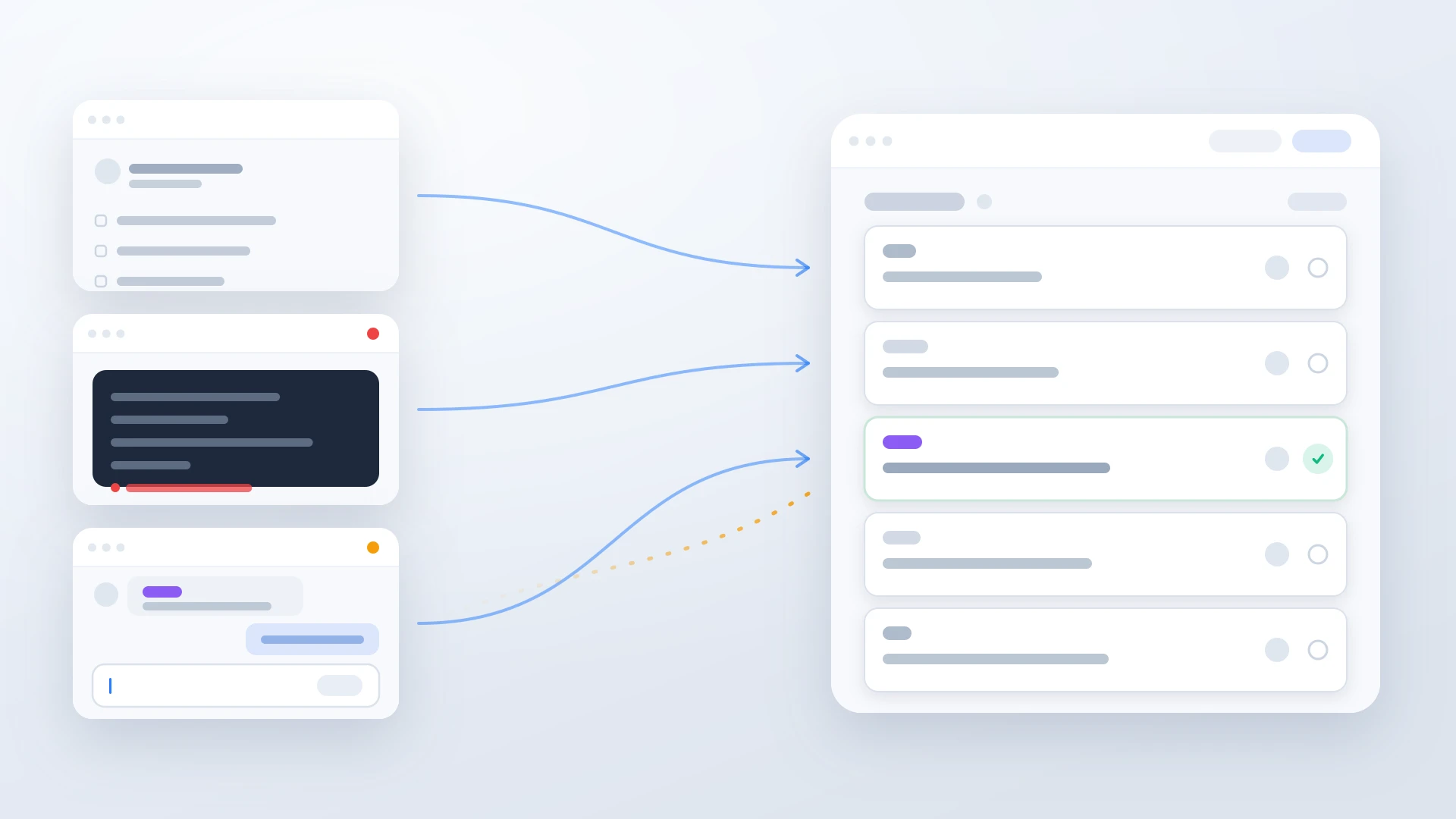
On Freshdesk, and on every alternative in this guide, the answer is the same. It gets escalated, which in practice means somebody retypes the details into Jira, Linear, or GitHub, pastes a link into an internal note, and sets the ticket to pending. From that moment it has no owner. Support is waiting on engineering, engineering is looking at an issue with no customer attached to it, and the customer is waiting on a person who has no way to know when the fix lands.
That last point is what makes this particular wall so easy to miss on Freshdesk specifically. The product teaches you, reasonably, that queue problems are solved by buying the tier that has the feature. Tickets piling up unassigned is a routing problem and routing is on Pro. Missed targets are an SLA problem and multiple SLA policies are on Pro. So the pattern holds for every queue problem except one, and the exception never gets a budget line, an owner, or a slide, because there is nothing to buy.
The failure is not dramatic either. Nothing errors, nothing alerts, and no report shows it. The fix ships, the issue closes, and the ticket that started it sits open until somebody notices, or gets auto-closed by an inactivity rule, which from the customer's side is indistinguishable from being ignored. Then the same customer reports the same bug six weeks later and nobody can tell them it was fixed a month ago.
Four things are worth checking on any tool you shortlist, whichever one you land on:
- When engineering changes the status of an issue, does anything happen inside the help desk without a person doing it?
- Can you produce a list, today, of every open ticket waiting on an engineering fix, and how long each has been waiting?
- When a fix ships, does anyone know which customers asked for it, or does that mean reading old tickets?
- Do comments travel both ways, or does the engineering context stay in the tracker where support cannot see it?
If the answers are no, no, no, and no, that is completely normal, and it is also the largest gap in your support operation regardless of which platform you choose. The support ticket triage guide covers deciding which tickets should cross that boundary at all, the bidirectional sync explainer covers why the comment half is the part homemade versions get wrong, and support SLA management covers the awkward truth that a resolution target on a confirmed defect is a promise about somebody else's backlog.
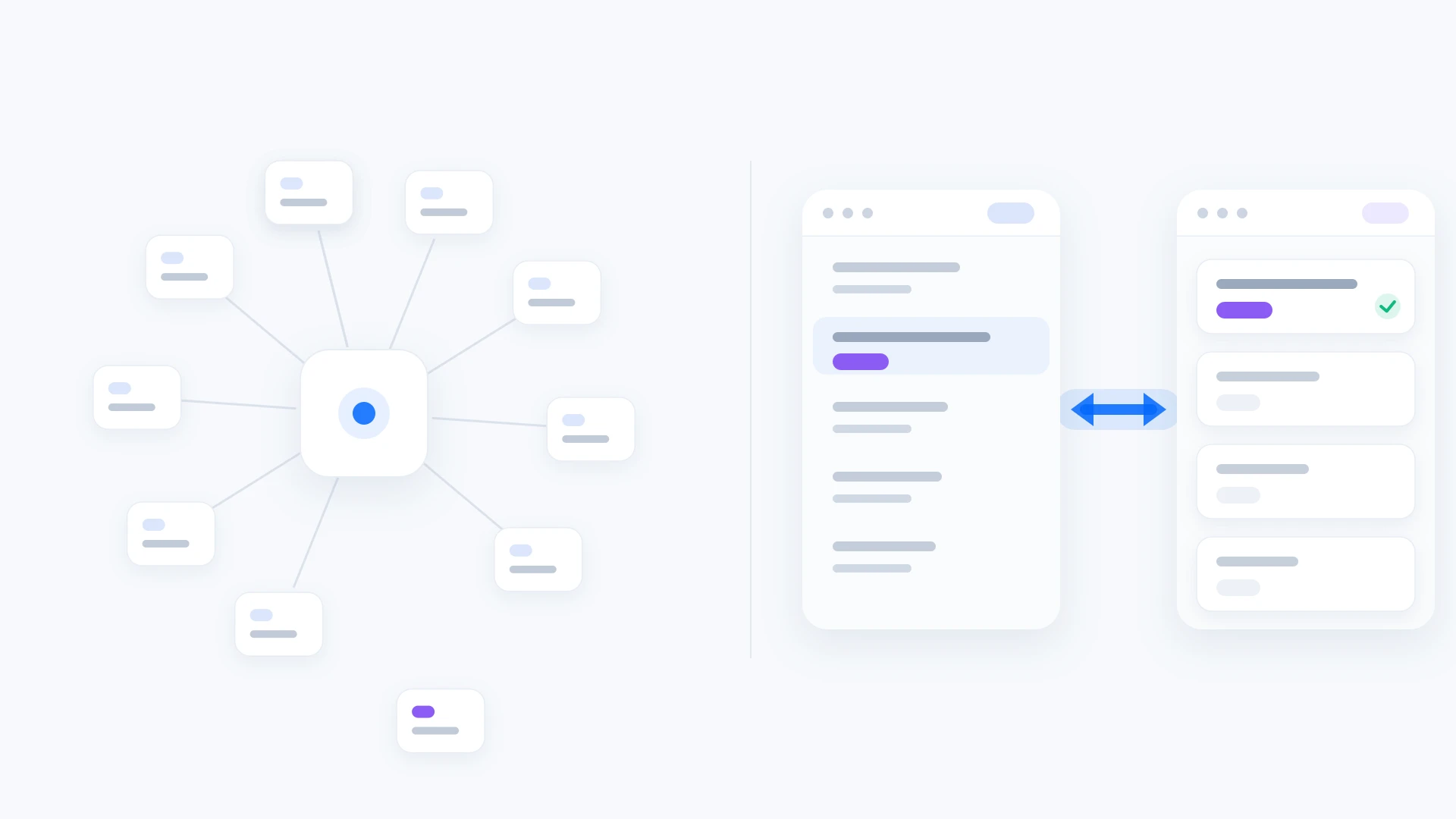
For teams landing on HubSpot, this is the job IssueLinker was built for. A HubSpot ticket becomes a Linear, Jira, or GitHub issue in one click, status and comments stay in sync in both directions with loop prevention built in, and the customer-facing reply is staged for the moment the fix ships rather than depending on somebody remembering. The Linear HubSpot integration guide walks through the four ways teams usually try to build that themselves, and managing feature requests from support to engineering covers the same boundary for requests rather than defects.
The next help desk will not close the engineering loop either
Whichever wall moved you, the ticket that needs a code change is the one that goes quiet. IssueLinker turns a HubSpot ticket into a Linear, Jira, or GitHub issue in one click, syncs status and comments both ways, and stages the customer reply for the moment the fix ships.
How to Pick the Right Freshdesk Alternative
Three questions settle this faster than any feature grid. Which wall did you hit? Where do your conversations actually start? And how many of your tickets need somebody outside support to resolve them?
You do not need a new category of tool, you need the same tool with that feature lower down the ladder. Zoho Desk if you want like for like and cheaper, Hiver if your support is email and your team already lives in Gmail.
Adding chat or voice should not reprice every agent you have. LiveAgent if the channel is voice and budget is the constraint, HubSpot if the conversation belongs on the customer record anyway.
The volume-shaped tool was never going to fit. Front if several people share the account conversation, Help Scout if support should read like email, Service Hub if the CRM is already the system of record.
A real share of your queue cannot be closed by support at all, and no tier of any platform here changes that. Switching tools does not touch it. Connecting the one you pick to your engineering tracker does.
If you are torn between two finalists, run the same month twice on paper. Take last month's real ticket count, your real agent count, the channels you actually used, and the AI volume you actually consumed, and price both. Then add the seats you would buy for people who only need to read. The winner is usually obvious once the numbers are yours rather than the vendor's.
Every wall in this category has a price on it except the last one, and the last one is the only one your customers can see.
The test at the end is the same one that made Freshdesk attractive in the first place. Does a message from a customer reach the person who can resolve it, and does the customer find out when it is resolved, without anyone tracking it in their head? If yes, the tool is earning whatever it costs, and the tier you are on is a detail. If your queue looks healthy while your escalated tickets are a folder nobody reports on, the thing to change may not be the help desk at all. The customer service metrics guide covers measuring the first half honestly, and how support and engineering teams communicate covers the second.